
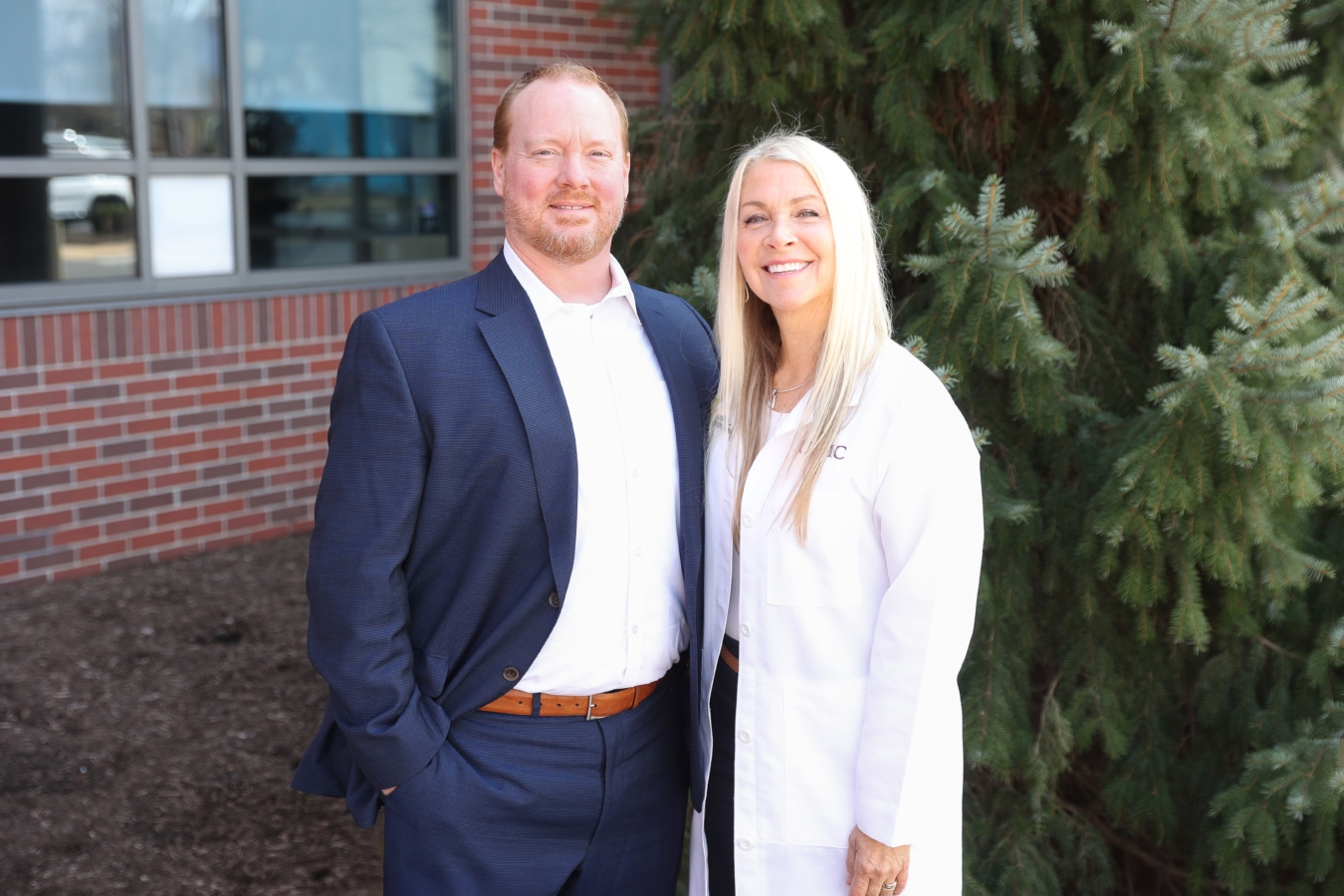
Michael Gerst, D.O., F.A.C.E.P., is the vice president of Medical Affairs and chief medical officer for Emergency Services for UPMC in North Central Pa., and he has been part of UPMC Williamsport’s Emergency Department since 2015. After the birth of their twins, Michael’s wife, gastroenterologist Heather Gerst, D.O., also became part of the UPMC Williamsport team in 2015. She is currently an associate at UPMC’s Digestive Disease Center in Williamsport. For many years, the Gersts have donated to support health and medical needs facing their community. Some might wonder what motivates their steadfast generosity.
“We see the real benefits from both sides as physicians and community members,” says Heather. “Donations to Susquehanna Health Foundation strengthen our local hospitals and help provide resources that normally would be hard to find this far from a big city. Foundation funds bridge the gap to provide more to patients who live here. These people are my patients and my neighbors. That’s why we are so committed to giving.”
Medical School Meet-Cute
So how did this dynamic duo first meet?
One fateful day back in medical school, two students were late to class at Lake Erie College of Osteopathic Medicine (LECOM). “It was a huge class, and we sat alphabetically in the auditorium … unless we were late. Then you sat in the back.” recalls Michael. “Back then, I ran late for that class more often than not, so I usually sat in the back.”
That day, out of the ordinary, Heather ran late for class as well. The two sat next to each other. Having never seen this young woman before, Michael started chatting with her. Heather explained that she was late to class because she was just returning from a family fishing vacation. As an avid outdoorsman who loved to fish, Michael, you could say, was hooked.
“Heather asked me to take her fishing,” Michael remembers. “When the day came, she thought we were going boat fishing, like her family did, so she didn’t have any gear with her. We ran out to a local shop and got her waders and some other stuff, then she was good to go. We had a great time.”
“It was a great time, even if I almost drowned!” Heather adds with a giggle. She had never been lake fishing off the shoreline before, and slowly, without her realizing it, the bib on her waders started to fill with water. Lake Erie’s current and the weight of the water-logged waders were a bad combination, and Heather felt herself being pulled deeper and deeper into the lake. Then she found herself struggling to get back to land. “Mike came rushing out and pulled me back to shore. It was a bit of a harrowing experience. But we’ve been married 20 years now and have three kids and a wonderful life, so I think it’s safe to say it turned out to be a great first date after all,” Heather adds with a laugh.
Deep Appreciation for Their UPMC Family
From the start, both Michael and Heather say they have felt an incredible sense of community and family within UPMC in North Central Pa. “The people I work with are the best,” says Michael. “I’m proud of what we do for patients and each other, every day.” Having been a vital part of the growth and development of the Emergency Services program over the past decade, his words come from a place of true understanding and appreciation.
Michael was drawn to the pace, direct interaction with patients, and the unpredictability of emergency medicine. “It’s never the same workday twice, and that suits me,” he says. In his supervisory role, Michael has found training and developing the medical staff to be very rewarding as well. “Helping younger doctors grow is really great. Making sure they learn to be in tune with patients and communities is something you just can’t learn from a book or lecture.”
Michael was originally hired while the emergency department (ED) program was still a third-party contract, meaning the ED was outsourced. UPMC wanted to bring everything under its own direction. Unlike the big hospital umbrella systems he had come from and wanted to get away from, the UPMC in North Central Pa. model was vastly different. Here, hospitals retained their community focus and feel while still offering opportunities to provide cutting-edge care. They also have access to a network of medical experts from the entire UPMC system, which benefits their patients, especially those with difficult injuries or conditions. “It took roughly three years to move the ED to an in-house service under the hospital system’s control. It was a big project but very rewarding,” says Michael. “Today we run our EDs locally and have a good collaborative relationship with Pittsburgh and other UPMC branches when it comes to problem-solving and innovation. It’s a great balance.”
Heather agrees. The commitment to the community has not been compromised, and specialty centers like hers are all the better for it. She feels the most rewarding part of her job is the connection she shares with her patients. It is something that UPMC fosters among its teams. “I have a good sense of humor and bring compassion to each patient visit, and I think it makes it easier for them to talk about their digestive issues,” she says. Jokingly, she adds that her bedside manner inspiration is the children’s book Everyone Poops (T. Gomi, Chronical Books, 2020, originally published in 1977). Her goal is making talks with your gastroenterologist less embarrassing and gaining a patient’s trust.
“These are very personal things, and if I can make patients feel comfortable enough to talk about them, then we can really find out what is going on and figure out how to help them,” says Heather.
Firsthand Experience with Foundation Support
Heather knows what donor support can do from firsthand experience. “A few years back, I reached out to the Foundation for the first time to ask for help with a purchase of a unique interactive teaching tool to educate the community about colon cancer and other diseases,” she explains. And unique it was: Heather requested a 10-foot inflatable walk-through colon.
“I had been to a conference and a 5K fundraiser where people could walk through an inflatable colon that visualized what colon cancer, polyps, and other conditions looked like, and I thought about how much colorectal cancer awareness we could bring to our community with something like that,” says Heather. “Education about colon health is so important, because early intervention is critical for improving treatment options and survival rates.”
The Foundation listened to Heather’s idea and helped secure funds for the display. Today, the inflatable colon is part of a traveling show raising awareness about colorectal cancer, popping up in Williamsport, Muncy, and elsewhere. “I am so grateful for the Foundation’s support. There are patients who schedule colonoscopies or call their doctors about possible symptoms because they, or someone they know, walked through our inflatable colon and learned something,” says Heather. “The Foundation really understands the depth of what we are trying to do as community health providers.”
For the Gersts, Donating Is Personal
At a time when physicians all over the country are feeling the strain of tightening budgets and rising health care costs, the Gersts remain strongly committed to their patients and colleagues. They recognize the challenges of the rapidly changing health insurance landscape and of modern day skepticism toward medicine in general. They are keenly aware of the needs of their own community. Because they know all this, the Gersts find giving to the Foundation to be both rewarding and impactful.
“We donate every year, because we know all the good that the UPMC staff is doing,” says Michael. “We want to support everyone here, and this is how.”