
A new vibration plate and dynamic movement intervention equipment are helping transform the lives of pediatric rehabilitation patients.
UPMC Pediatric Rehabilitation is a specialized center providing physical, occupational, speech, and feeding and swallow therapy for children. Whether children are grappling with long-term health issues or need help getting skills back after an injury, the pediatric rehabilitation team is there to help them live their lives to the fullest.
Thanks to donor support, Susquehanna Health Foundation recently assisted in the equipment acquisition for two new pediatric rehabilitation therapies that are already helping some very special kids in our area: vibration plate therapy and dynamic movement intervention.
“I have seen children gain improved head control, develop independent sitting, initiate steps, and demonstrate greater confidence in movement,” says Madeline Finnerty, P.T., D.P.T., a pediatric physical therapist at UPMC Pediatric Rehabilitation. “I have seen patients accomplish skills that their family or doctors never thought were possible after consistent DMI therapy.”
What Happens During DMI Therapy?
First, there is a brief assessment so that the therapist can identify areas of deficit, which then guides the treatment. “Assessment begins with a comprehensive evaluation of motor development, postural control, strength, endurance, and safety requirements,” says Madeline. Physical therapists like Madeline look at how the child responds to movement challenges, their tolerance for handling activities, their medical history, and their family goals. “DMI is selected when a child would benefit from active, task-specific functional therapy,” explains Madeline.
During a therapy session, a child will complete many different selected exercises that provide novel and varied sensory and motor challenges, and each exercise is repeated about five times. Exercises are chosen that will challenge the child’s neurological system and develop core and foundational milestones.
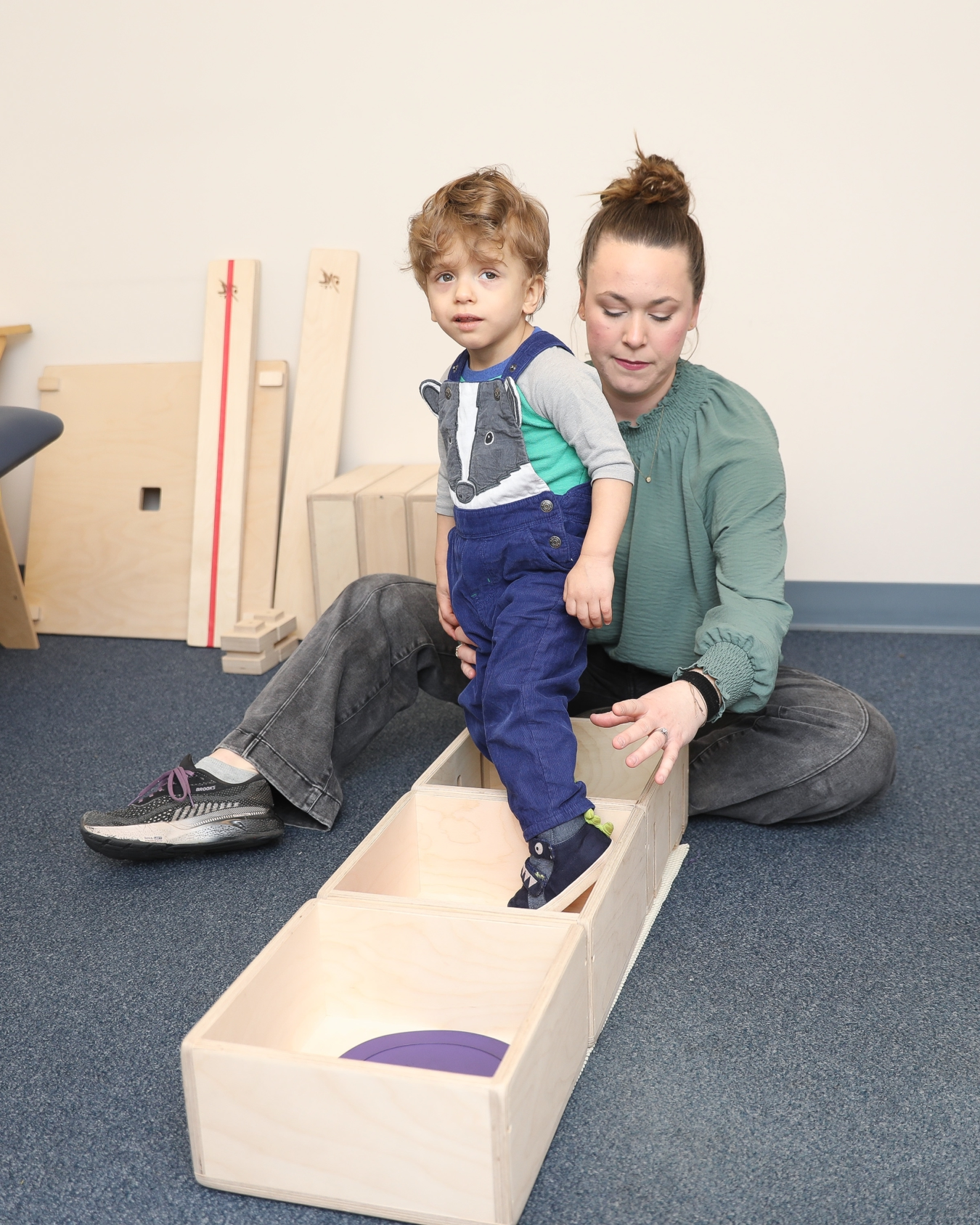
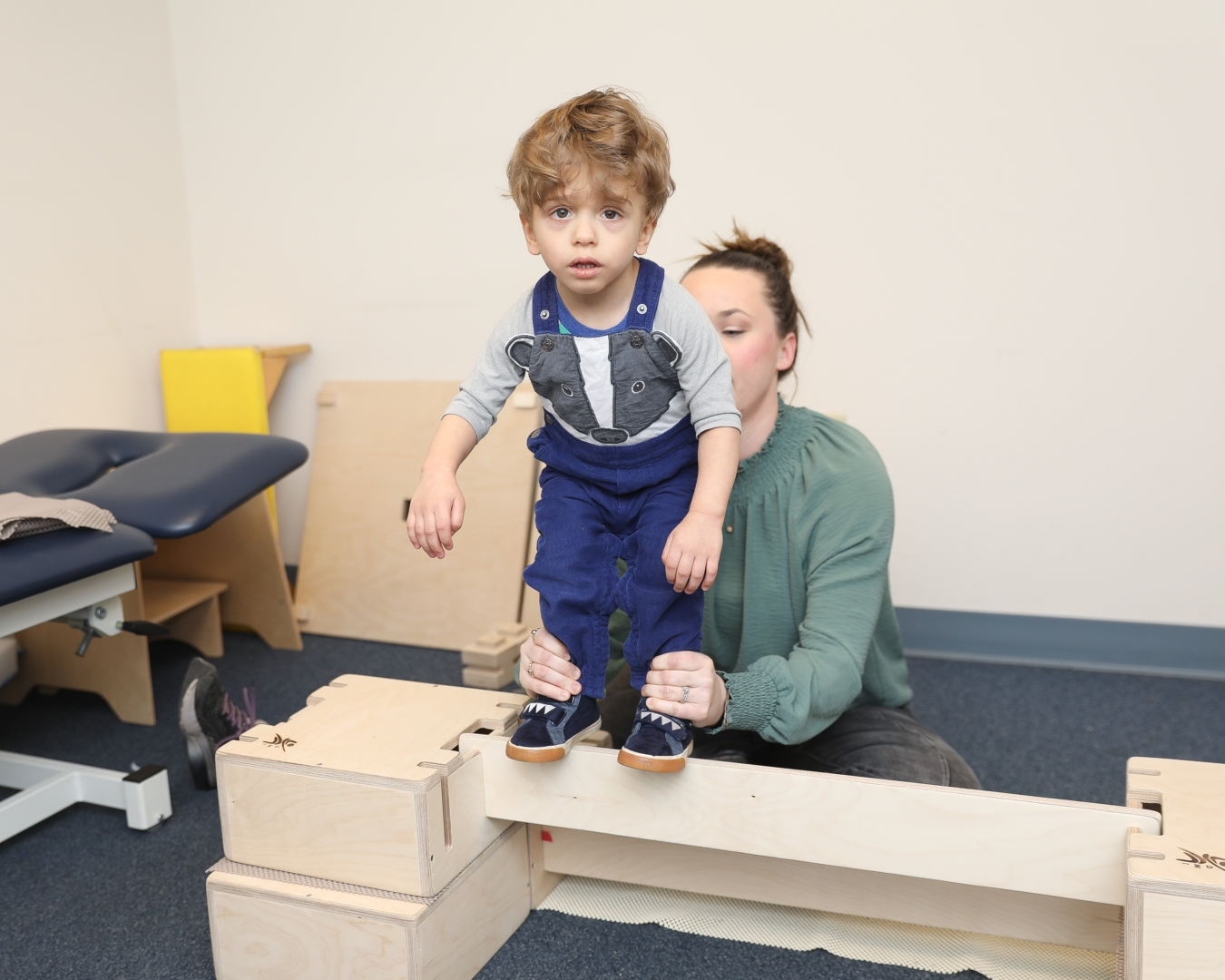
“DMI is a hands-on therapy technique provided by trained DMI therapists,” explains Madeline. Specific wooden boxes, beams, boards, and cubes are used that can be configured into hundreds of different active exercises based on the child’s specific goals. Exercises might be repeated from session to session until the movements become automatic, which results in improved balance and function. Exercises are conducted on a tabletop or the floor.
DMI is often one part of broader treatment sessions. It integrates well with task specific electrical stimulation (TASES) as well as other physical therapy activities. “Combining DMI with functional play helps children generalize new motor skills into everyday activities,” Madeline says.
What Types of Pediatric Patients Benefit from DMI Therapy?
Regardless of a child’s level of cognition and extent of neurological deficit or damage, they can benefit from DMI therapy. That is because it focuses on stimulating neuroplasticity in the developing brain. Children at risk for motor delay, such as those who are born prematurely, can also benefit from DMI therapy.
“DMI can be used with any child who is demonstrating any sort of developmental gross motor delay,” says Madeline. Common diagnoses that DMI can be recommended for include, but are not limited to:
- Down syndrome
- Cerebral palsy
- Hypotonia (low muscle tone)
- Spina bifida
- Rare genetic or neurologic disorders
- Chromosomal abnormalities
- Global developmental delay
DMI principles are most commonly applied within pediatric physical therapy because of the emphasis on gross motor development. However, occupational therapists might sometimes incorporate similar dynamic handling techniques when addressing functional mobility, upper-body control, or participation in daily activities.
Progress depends on diagnosis, frequency of therapy, and carryover at home. “Every child progresses differently. Some families notice changes in engagement, head control, or stability within as few as 1–2 sessions, while larger functional gains might develop over weeks to months of consistent therapy,” says Madeline.
DMI has been a valuable therapeutic approach for families and children who have felt stuck in their gross-motor progress. Madeline says that being able to help kids get to a point where they feel “unstuck” is a great feeling.
“The most rewarding parts of my work are helping children gain independence and seeing families celebrate milestones they once thought were out of reach,” says Madeline. “Watching a child discover new ways to move and interact with the world is incredibly meaningful.”
New Dynamic Movement Intervention Equipment
Dynamic Movement Intervention (DMI) is a therapeutic approach used primarily in pediatric rehabilitation to improve automatic postural responses, strength, and motor development. “The goal is to challenge a child’s balance and alignment in a safe, structured way so their nervous system learns more efficient movement patterns that support functional skills such as sitting, crawling, standing, and walking,” says Madeline. She has been practicing pediatric DMI therapy for three years, including a year at UPMC.
“DMI is a comprehensive interventional approach that incorporates current research on neurorehabilitation technologies and methodologies,” says Madeline. DMI stimulates neuroplasticity to facilitate new neuronal connections and to develop motor skills achievement targets. It focuses on:
- Gross motor skills
- Gradual progression
- Alignment and postural control
- Range of motion
- Balance
- Functional movements
- Somatosensory development
- Modifying tone, primitive reflexes, and abnormal patterns of movement
- Global development
“DMI is designed to directly improve gross motor development, including head control, sitting balance, transitions, standing, and walking,” explains Madeline. Balance and postural control are other primary goals. Therapists provide specific balance challenges (and just enough support that is necessary) to help children develop protective and postural reactions. “Another primary focus of DMI is to improve functional motor patterns that translate into daily activities like playing, exploring, and interacting with one’s environment,” adds Madeline.
DMI is not passive stretching but instead incorporates active positioning and movement patterns to help improve a child’s range of motion and mobility. “Children also often show improvements in endurance, coordination, visual engagement, and confidence with movement when DMI therapy is integrated into their rehabilitation programs,” notes Madeline.
New Vibration Plate Equipment
UPMC Pediatric Rehabilitation patients now have access to a new therapeutic platform known as a vibration plate. The plate is used as an adjunct to regular task-specific therapies not as a stand-alone intervention. Rapid muscle contractions caused by the vibrating platform can help to improve strength, balance, coordination, bone density, and sensory processing. Therapists can use different frequencies of vibrations for targeted benefits in physical therapy and occupational therapy. Vibration plate exercises can help make therapy more engaging while boosting core strength, proprioception (the body’s subconscious ability to sense its position, orientation, and movements), and nervous system regulation.
“A vibration plate is a therapeutic platform that delivers whole-body or localized mechanical vibration,” says Adrianna Fletcher, P.T., D.P.T., a pediatric physical therapist with UPMC Pediatric Rehabilitation. When a child is positioned on the plate, the oscillations stimulate muscle spindles and proprioceptive receptors, and elicit reflexive muscle contractions. This can facilitate postural activation for strengthening and engaging core muscles, as well as sensory input, circulation, and neuromuscular priming. Vibration plates can be used in rehabilitation for children with conditions such as:
- Cerebral palsy
- Autism spectrum disorder (used selectively, depending upon sensory tolerances)
- Brain injuries (only after medical clearance)
- Hypotonia (low muscle tone)
- Developmental delays
“Vibration plates can also be used in select cases of spinal cord injuries, orthopedic conditions, and certain balance and coordination disorders, after medical clearance,” says Adrianna.
How the Vibration Plate Works
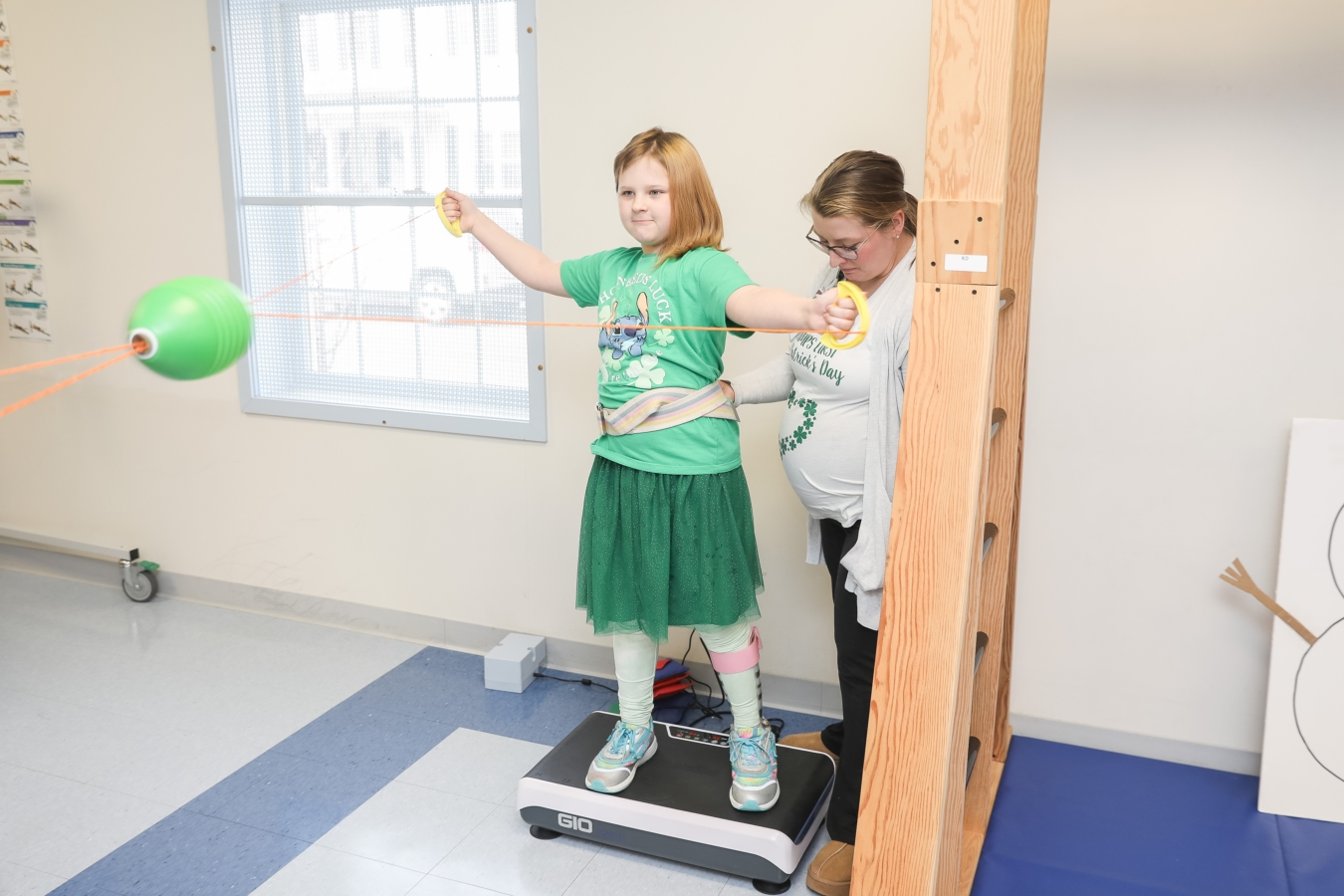
Vibrations from the plate stimulate muscles, triggering involuntary contractions and relaxations, similar to the way exercise does. Vertical (synchronous) or side-alternating (rocking) motions are used, and therapists adjust the duration and intensity. Frequencies and amplitudes are chosen based on many factors, including diagnosis, medical precautions, age, body size, and functional goals. According to Adrianna, patients are generally started with low frequencies and amplitudes and are given short bouts of vibration lasting between 30–90 seconds. Patients are carefully monitored for fatigue, autonomic responses, discomfort, and increased muscle tone, and adjustments can be made as necessary.
Vibration plate exercises can be integrated into therapy for functional tasks, improving postural activation, supporting weight bearing, and providing graded sensory input. One child might stand (with or without assistance) on the plate to work on weight-bearing activities, lower extremity activation, or balance therapy. Another child might be in a quadruped or tall kneeling position on the platform for trunk and proximal stability therapy. Yet another might sit on the platform for postural activation and sensory input. Some children simply put their hands or feet on the vibrating plate for localized activation. There are many ways in which the vibration plate can be used, and games are often incorporated into the exercises to make them more fun.
“The most rewarding part of my job is building relationships with families and helping them see their child’s potential,” says Adrianna. “Progress doesn’t always happen overnight, but being there for each step forward — no matter how small — is what makes this work truly special.”
Being able to incorporate new therapeutic tools and activities, like the vibration plate, offers therapists like Adrianna ways to work toward progress with the patients who depend on her.